

Horizontal

In cleanroom design and operation, airflow pattern is one of the core elements. Proper airflow patterns not only effectively control particle dispersion and microbial concentration, but also ensure product quality and personnel safety. Different processes and industries require different cleanroom airflow types. These are generally classified into three main types – laminar airflow, turbulent airflow, and combined airflow – each with its own applications and distinct characteristics.

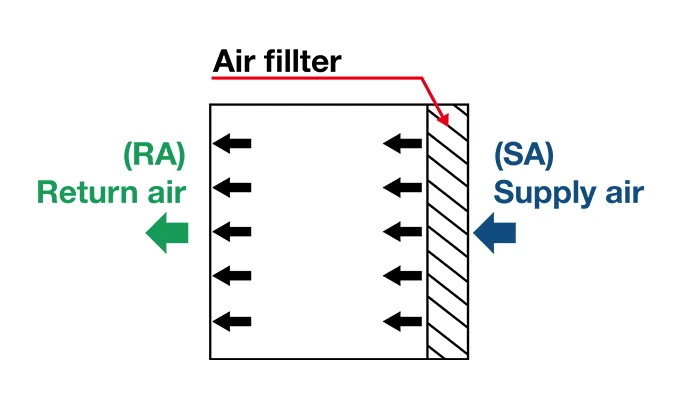
Air is typically supplied into the room through High efficiency particulate air filters (HEPA/ULPA) at a uniform velocity (0.3–0.5 m/s), flowing in a single direction to create a 'piston effect' that rapidly removes contaminants.
Horizontal
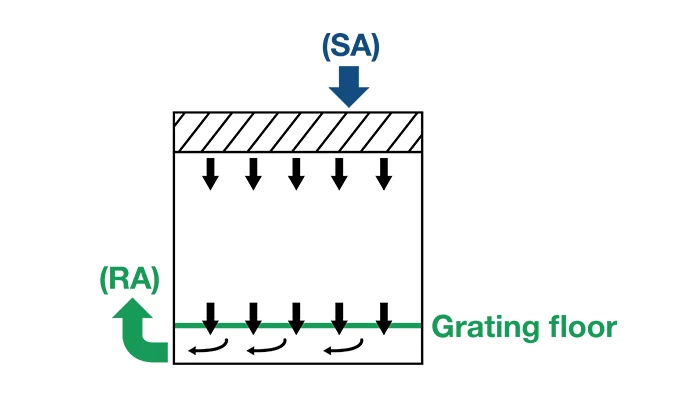
Vertical
Air moves in multiple directions and random patterns, creating irregular turbulent airflow. This mixes and dilutes airborne particle concentrations before they are ultimately exhausted through vents or return ducts.
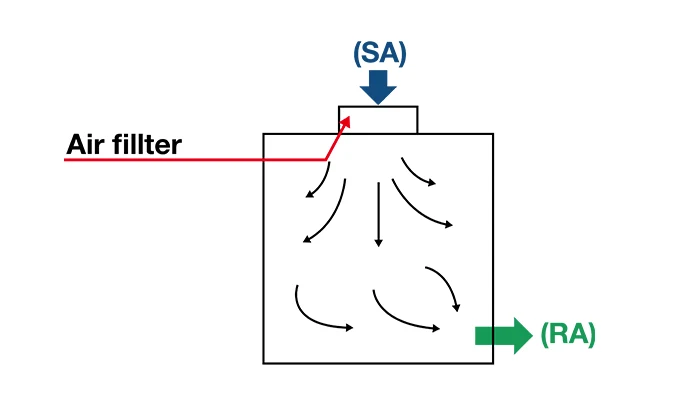
Turbulent airflow
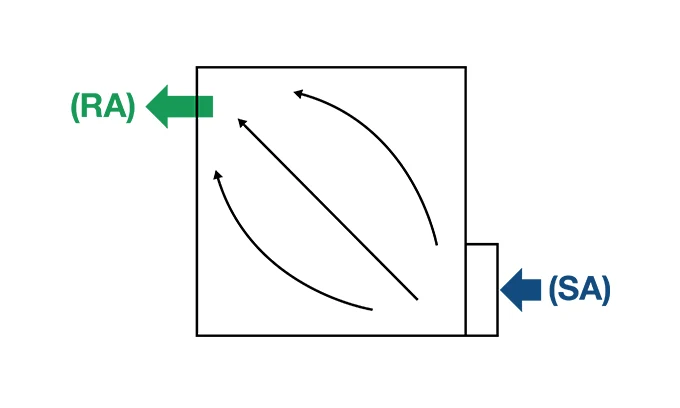
Radial airflow
Combining the characteristics of unidirectional and non-unidirectional airflow, unidirectional airflow is used in critical areas, while non-unidirectional airflow is applied in other zones.
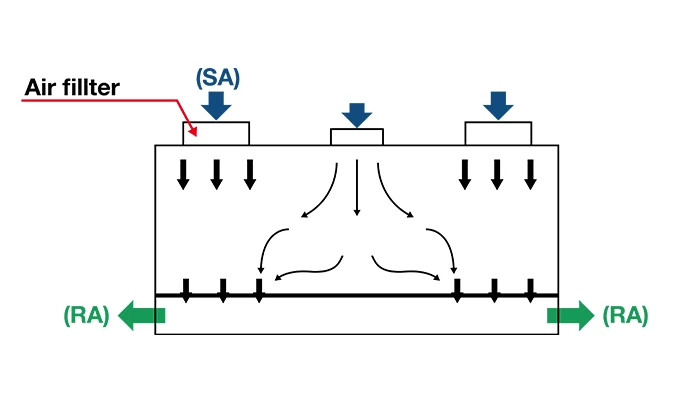
Laminar airflow + turbulent airflow


One-Stop Cleanroom System Solution Provider