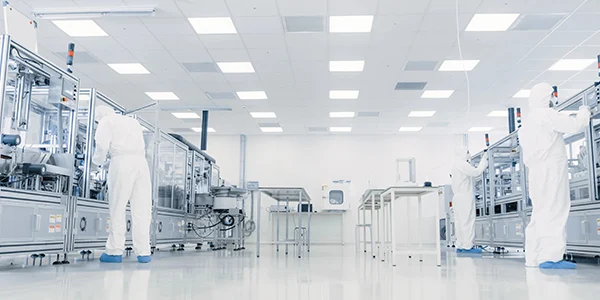

As critical environments for high-precision manufacturing, medical research, and pharmaceutical production, cleanrooms must be designed and operated in compliance with stringent international and national standards. Common cleanroom standards include the ISO 14644 series, GMP (Good Manufacturing Practice), FDA regulations, as well as various country- or industry-specific standards. These standards specify clear requirements for air cleanliness classes, particle control, microbial limits, temperature and humidity, pressure differentials, air change rates, and monitoring methodologies, thereby ensuring product quality and personnel safety.

| Class | > 0.1 μm | > 0.2 μm | > 0.3 μm | > 0.5 μm | > 1 μm | > 5 μm | FED STD 209E equivalent |
|---|---|---|---|---|---|---|---|
| ISO 1 | 10 | 2 | – | – | – | – | – |
| ISO 2 | 100 | 24 | 10 | 4 | – | – | – |
| ISO 3 | 1,000 | 237 | 102 | 35 | 8 | – | Class 1 |
| ISO 4 | 10,000 | 2,370 | 1,020 | 352 | 83 | – | Class 10 |
| ISO 5 | 100,000 | 23,700 | 10,200 | 3,520 | 832 | 29 | Class 100 |
| ISO 6 | 1,000,000 | 237,000 | 102,000 | 35,200 | 8,320 | 293 | Class 1,000 |
| ISO 7 | – | – | – | 352,000 | 83,200 | 2,930 | Class 10,000 |
| ISO 8 | – | – | – | 3,520,000 | 832,000 | 29,300 | Class 100,000 |
| ISO 9 | – | – | – | 35,200,000 | 8,320,000 | 293,000 | Room Air |
| Class | > 0.1 μm | > 0.2 μm | > 0.3 μm | > 0.5 μm | > 5 μm | ISO equivalent |
|---|---|---|---|---|---|---|
| 1 | 35 | 7 | 3 | 1 | – | ISO 3 |
| 10 | 350 | 75 | 30 | 10 | – | ISO 4 |
| 100 | – | – | – | 100 | – | ISO 5 |
| 1000 | – | – | – | 1000 | 7 | ISO 6 |
| 10,000 | – | – | – | 10,000 | 70 | ISO 7 |
| 100,000 | – | – | – | 100,000 | 700 | ISO 8 |
| EU GMP Grades | ISO equivalent | Description |
|---|---|---|
| A | ISO 5 | The highest grade, typically required for local laminar flow hoods, isolators, or aseptic filling zones. |
| B | ISO 5 | Serves as the background environment for Grade A areas, ensuring a clean background for aseptic operations. |
| C | ISO 7 / ISO 8 | Primarily used for preparation of sterile ingredients, secondary operations, and non-critical processes in sterile product manufacturing. |
| D |